BL103PW goes beyond traditional protocol conversion by unifying multi-vendor PLC communication into one standardized OPC UA interface. It connects Siemens, Mitsubishi, Omron, Delta PLCs, Modbus RTU/TCP devices, and delivers consistent industrial data access for SCADA, MES, and digital transformation applications.
When people first see the BL103PW, they usually describe it as an Industrial Protocol Gateway.
That's true.
But that's only half the story.
The real value of BL103PW isn't simply reading PLC data.
It's organizing fragmented industrial communication into one standardized interface.
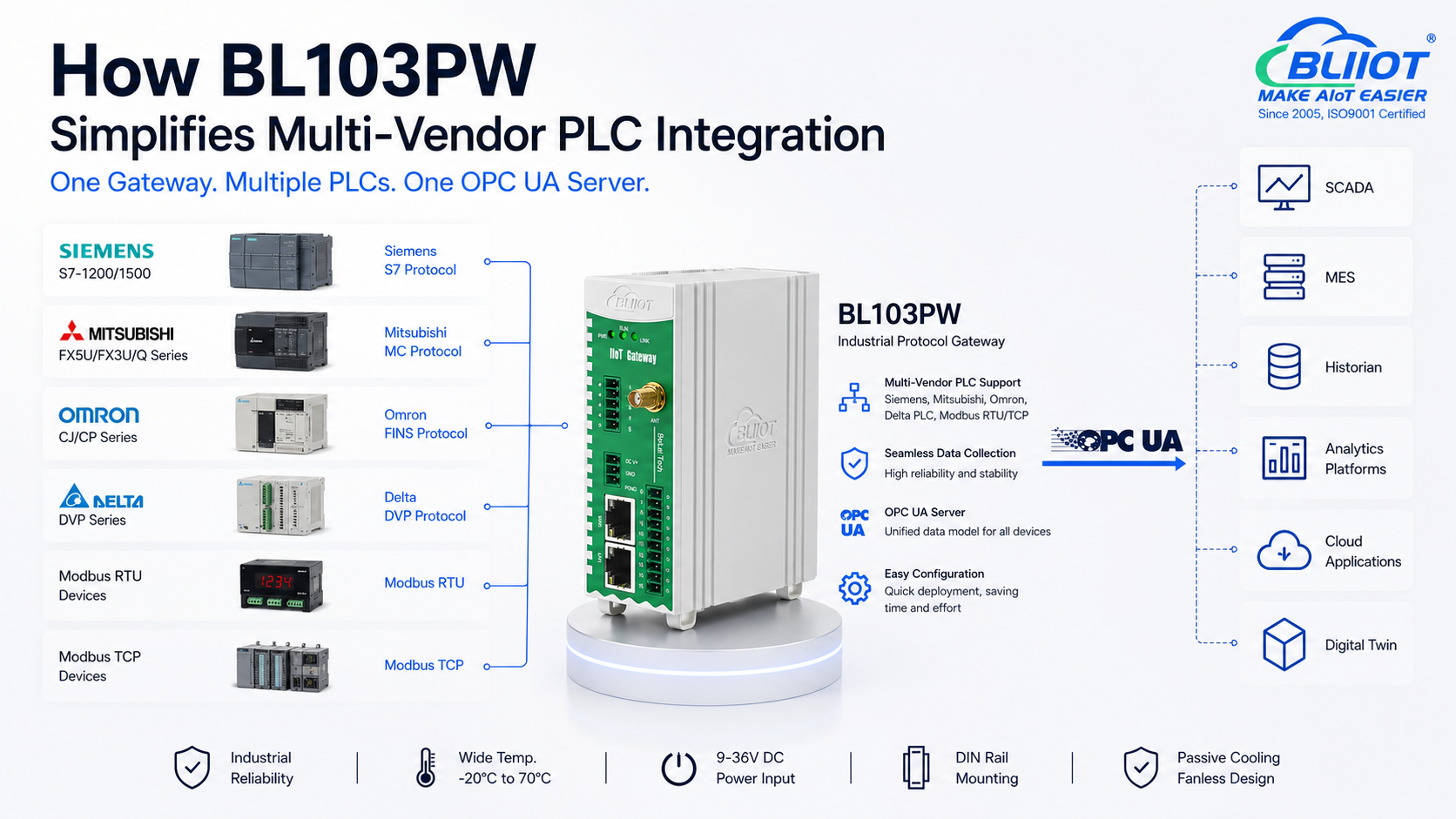
Imagine a production line like this:
- Siemens S7-1200 controls the conveyor
- Mitsubishi FX5U controls the packaging machine
- Omron PLC handles inspection
- Several Modbus RTU energy meters monitor power consumption
- A Modbus TCP remote I/O system collects environmental data
Everything works independently.
The problem begins when an upper-level system wants to collect data.
Normally, engineers must configure multiple communication drivers.
Different IP settings.
Different addressing rules.
Different polling mechanisms.
Different maintenance procedures.
This is exactly where BL103PW changes the architecture.
Instead of allowing every software platform to communicate with every field device individually, BL103PW becomes the communication hub.
Southbound Communication
BL103PW communicates directly with industrial devices using their native protocols:
✔ Siemens PLC
✔ Mitsubishi PLC
✔ Omron PLC
✔ Delta PLC
✔ Modbus RTU
✔ Modbus TCP
No changes are required to the existing PLC programs.
No additional protocol converters are needed.
Northbound Communication
Once the data is collected, BL103PW exposes everything through a single OPC UA Server.
Whether your software is SCADA, MES, Historian, Digital Twin, or another OPC UA client, it only needs one connection.
Instead of learning six different industrial protocols...
...it simply connects to BL103PW.
Why This Matters
As factories expand, communication complexity grows much faster than hardware.
One new machine usually means:
• another protocol
• another driver
• another engineering document
• another maintenance task
BL103PW prevents that complexity from spreading.
It creates a clean separation:
Field Devices → BL103PW → OPC UA Applications
This architecture makes future expansion significantly easier while reducing engineering effort during deployment.
Digital transformation isn't only about connecting machines.
It's about making industrial data consistent.
That's exactly what BL103PW was designed to do.


