Transform legacy HVAC systems into smart, connected buildings without costly replacements. BA107L enables seamless multi-brand integration, BACnet connectivity, remote management, and smarter energy optimization to reduce operating costs and improve building efficiency.
A Real Retrofit Solution for Multi-Vendor Building HVAC Integration
Many commercial buildings face the same challenge during digital transformation:
The HVAC system works well — but the data is trapped.
Replacing an entire HVAC infrastructure is expensive, disruptive, and often unnecessary.
The smarter approach is to connect existing equipment, unify data, and bring legacy systems into modern building management platforms.
This is exactly what happened in a 120,000㎡ shopping mall retrofit project.
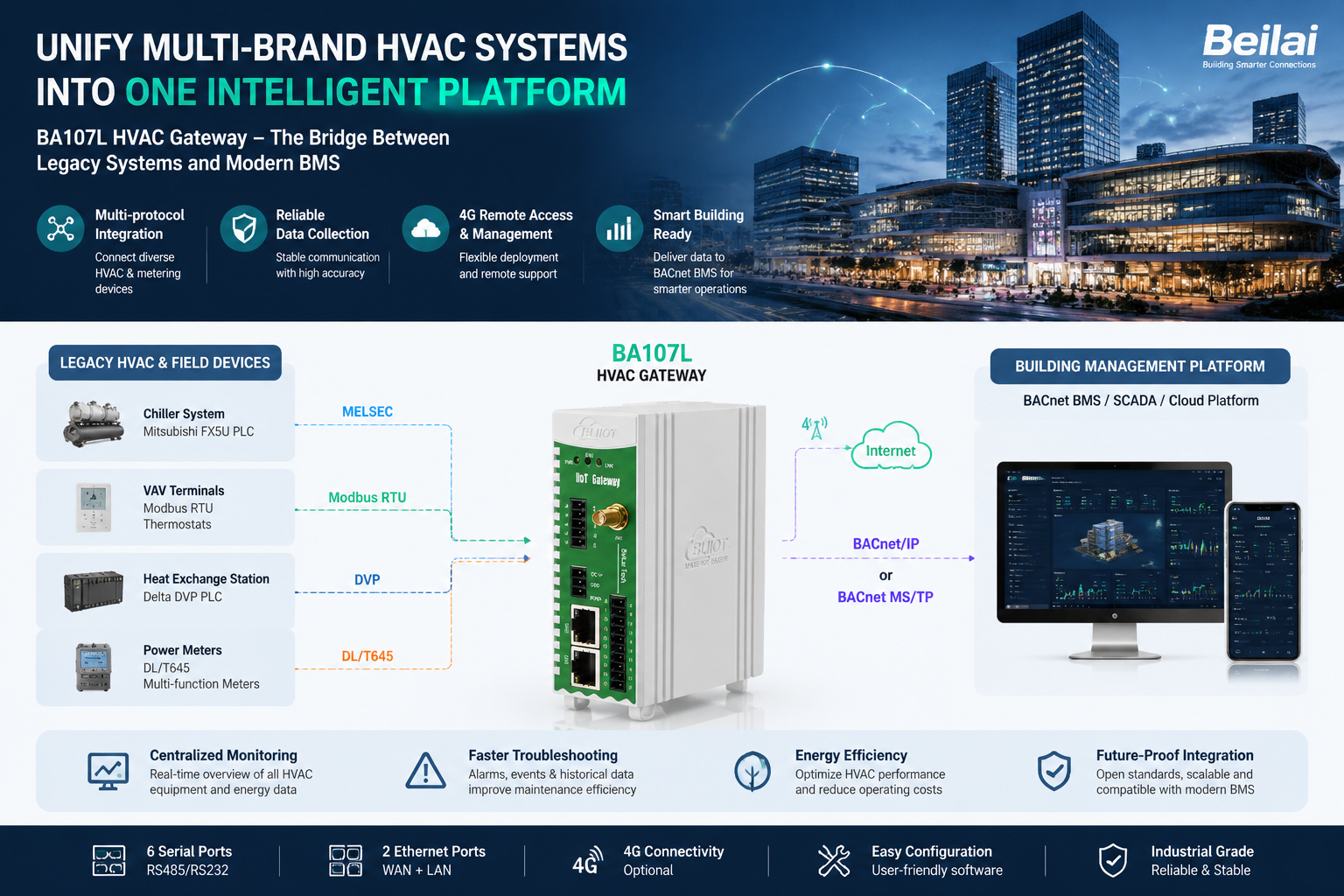
Project Challenge: A Building Full of Isolated Systems
The shopping center had been operating for years with HVAC equipment from different manufacturers:
- Chiller system: Mitsubishi FX5U PLC
- Floor VAV terminals: Modbus RTU temperature controllers
- Heat exchange station: Delta DVP PLC
- Energy meters: DL/T645 multi-function meters
Each subsystem worked independently.
However, when the building owner wanted to upgrade to a new BACnet-based Building Management System (BMS), several problems appeared:
1. Different protocols, no unified communication
The existing equipment used different communication standards:
- Mitsubishi PLC protocol
- Delta PLC protocol
- Modbus RTU
- DL/T645
The BMS platform could not directly communicate with all devices.
2. Manual operation created high maintenance costs
Facility engineers had to manually check:
- Energy consumption
- Equipment status
- Operating parameters
- Fault information
This increased labor costs and delayed troubleshooting.
3. Replacing equipment was not realistic
The HVAC system represented years of investment.
Replacing PLCs, controllers, and meters would mean:
- High hardware costs
- Long shutdown periods
- Complex commissioning work
The customer needed a retrofit solution, not a rebuild.
Solution: BA107L Building HVAC Gateway
The project selected multiple units of BA107L (6 Serial Ports + 4G Wireless Version) as the communication bridge between legacy HVAC equipment and the new BACnet platform.
The gateway works as a protocol integration layer:
Legacy HVAC Devices → BA107L → BACnet BMS Platform
Instead of replacing existing controllers, BA107L collects data from different devices and converts them into a unified format for the building management system.
Why BA107L Fits Legacy HVAC Retrofit Projects
1. One Gateway Connects Multiple HVAC Systems
BA107L provides 6 independent serial ports, allowing different field devices to be integrated in one solution.
The gateway supports communication with various industrial and building automation devices, including:
- Mitsubishi PLC
- Delta PLC
- Modbus RTU devices
- DL/T645 energy meters
The configuration software allows engineers to select protocols, device brands, models, and data points according to the actual site requirements.
2. Convert Existing Data into BACnet Without Replacing Controllers
The biggest advantage of retrofit projects is:
Keep existing equipment. Upgrade intelligence.
BA107L can provide collected data through BACnet/IP or BACnet MS/TP, allowing traditional HVAC equipment to communicate with modern BMS platforms.
The building platform can now monitor:
- Chiller operating status
- VAV temperature information
- Heat exchange station parameters
- Electricity consumption data
All from one centralized system.
3. Remote Access Through 4G Connectivity
For large commercial buildings, installation locations are often distributed across mechanical rooms, floors, and equipment areas.
The 4G version provides flexible networking options without requiring complex network deployment. The gateway supports 4G configuration and remote management functions for easier maintenance.
Engineers can reduce unnecessary site visits and improve response efficiency.
4. Faster Deployment With Software Configuration
Traditional integration projects often require custom programming.
BA107L simplifies deployment through graphical configuration:
- Select communication protocol
- Add devices
- Configure data points
- Map variables
- Export unified data
The gateway supports configuration, monitoring, logging, and remote management functions to help engineers diagnose communication issues faster.
Project Result: From Fragmented HVAC to Connected Building Intelligence
After deployment:
✅ Multiple HVAC brands were integrated into one platform
✅ Existing PLCs and controllers remained unchanged
✅ BACnet BMS successfully collected all critical data
✅ Manual inspection workload was reduced
✅ Fault detection and energy management became more efficient
The building moved from isolated equipment management to centralized intelligent operation.
The Future of Building Retrofit Is Not Replacement — It Is Integration
Thousands of commercial buildings worldwide are facing the same problem:
Their HVAC systems are reliable, but their data is isolated.
The key challenge is not installing new equipment.
It is connecting what already exists.
With the right HVAC gateway, legacy buildings can become smarter, more efficient, and ready for modern BMS platforms — without expensive reconstruction.


